Elevate Male Kinetic Resilience Through Cadence
Prolonged seated labor induces postural compression and cardiovascular deconditioning. Bold Ascent applies clinical locomotive biomechanics to engineer purposeful walking cadence and ascending movement routines for working men.

Three Dimensions of Male Movement Health
We replace unstructured fatigue workouts with calibrated locomotive cadence, upright axial posture ergonomics, and restorative cellular clearing.
Ambulatory Cadence: The Zone 2 Foundation
Walking at an ordinary stroll of 70–80 steps per minute provides minimal cardiovascular stimulus. Accelerating to a structured rhythm of 105–120 steps per minute engages the muscular venous pump, stimulates mitochondrial biogenesis, and activates hip extension without joint impact.
- Cadence Rate: 110–120 SPM sustained over 30 to 45 minutes.
- Biomechanical Dividend: Restores hip extension range of motion inhibited by chair postures.
- Systemic Impact: Steady capillary blood flow without central nervous exhaustion.


Axial Decompression & Thoracic Extension
Sedentary work collapses the thoracic spine into passive flexion, compressing intervertebral spaces and shortening anterior hip musculature. Our hourly axial reset restores neutral spine curvature in under three minutes.
- Intervention: Standing thoracic extension with scapular depression breaks.
- Hip Capsule: Unloaded half-kneeling active length drills for hip flexor relaxation.
- Application: Conducted every 60 minutes during seated professional desk blocks.
Interactive Pace & Heart Rate Zone Calculator
Calibrate your walking cadence, incline gradient, and resting baseline to calculate precise aerobic heart rate zones and prescribed metabolic workloads.
Mitochondrial Aerobic Conditioning
Optimal pace for cellular resilience. Sustains fat oxidation and capillarisation without micro-trauma.
Precision Laboratory Validation
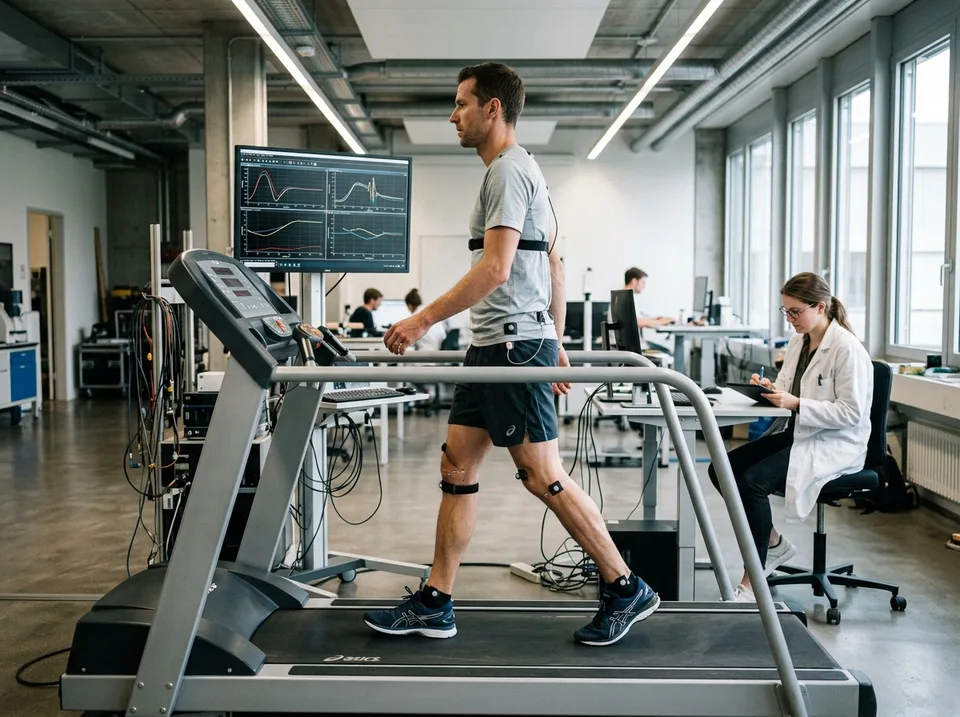
Every recommendation published by Bold Ascent originates in instrumented kinematic gait trials. Utilizing high-resolution treadmill telemetry and continuous metabolic gas analysis, we quantify muscular output across varying incline grades.
Our primary objective: identifying locomotive protocols that produce maximum metabolic resilience while preserving joint cartilaginous integrity in mature working men.
Biomechanical Advisory Faculty
Our multidisciplinary leadership combines clinical gait analysis, occupational ergonomics, and field telemetry expertise.

Dr. Alistair Ross, PhD
PhD in Human Locomotion Biomechanics from King's College London. Dr. Ross investigates longitudinal ambulatory cadence thresholds and mechanical efficiency in mature male cohorts.
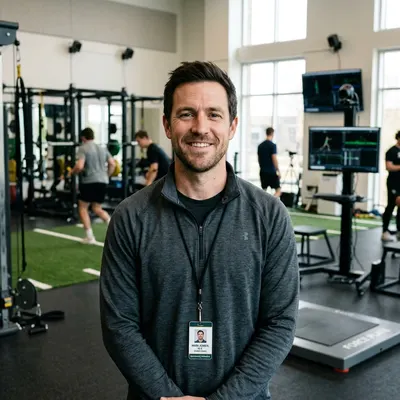
Mark Ehren, MSc
Specialist in cardiovascular workload metrics and Zone 2 aerobic threshold testing. Mark leads our incline gradient field trials and continuous telemetry verification.
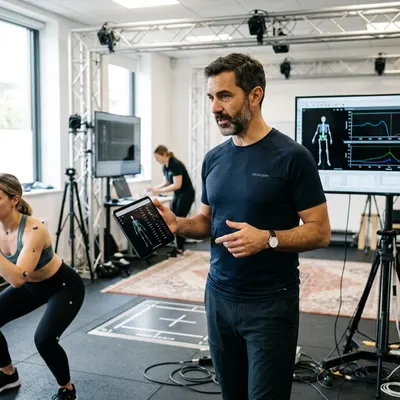
Nathan Cross, PT
Licensed physical therapist developing thoracic decompression protocols and desk-bound recovery micro-cycles for corporate professionals.
Request Protocol Specification & Monograph Access
Connect directly with our London advisory desk for corporate postural program specifications or academic cohort trial data.